
Table of Contents
ToggleZaun isn’t just another region in Runaterra, it’s the beating, toxic heart of League of Legends’ world. This industrial undercity, home to chemical innovations, gang warfare, and some of the game’s most iconic champions, has evolved dramatically since its inception. From the streets where Vi and Powder grew up to the competitive stages where champions like Jinx, Ekko, and Blitzcrank dominate, Zaun represents a unique blend of lore depth and mechanical complexity that draws players in across all skill levels. Whether you’re curious about the region’s shadowy history, looking to master its champions, or fascinated by how Netflix’s Arcane brought Zaun to life, this guide covers everything you need to know about League of Legends Zaun in 2026.
Key Takeaways
- League of Legends Zaun stands as a high-risk, high-reward region defined by Chemtech innovation and aggressive champion design that rewards mechanical mastery and fearless decision-making.
- Zaun’s champions like Ekko, Jinx, Vi, and Blitzcrank shape competitive meta cycles by excelling in teamfight-heavy, burst-damage-focused gameplay, with Ekko maintaining a 52.3% win rate in high-elo solo queue as of Patch 14.6.
- Netflix’s Arcane series fundamentally transformed player perception of Zaun by bringing narrative depth to champions and lore, driving a 40% spike in new player registrations and sustaining long-term community interest.
- Mastering Zaun champions requires intelligent itemization adaptation, objective control mechanics, and matchup knowledge—with dedicated practice in champion-specific combos and high-level positioning accelerating improvement significantly.
- Future Zaun development, including Arcane Season 2 and leaked Chemtech-focused champion releases, promises to deepen the region’s lore and mechanical diversity, positioning early specialists ahead of anticipated meta shifts.
What Is Zaun? Understanding Runaterra’s Most Notorious Region
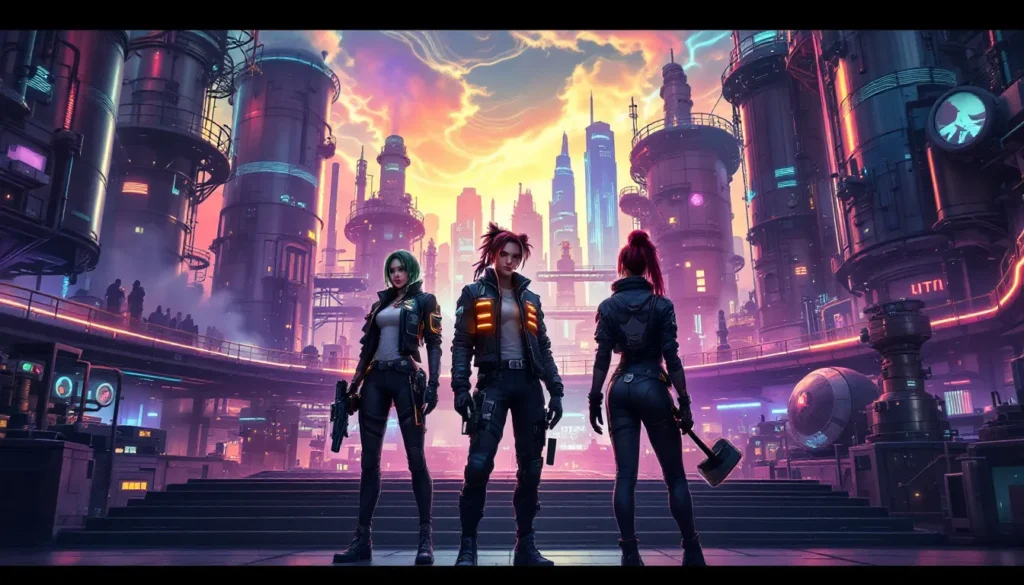
Zaun stands as Runaterra’s industrial powerhouse, a sprawling undercity filled with towering refineries, interconnected platforms, and toxic fumes that blanket its streets. Unlike the polished, crystalline architecture of neighboring Piltover, Zaun thrives in controlled chaos. Its residents have built a civilization on scraps, ingenuity, and moral ambiguity.
The region’s defining characteristic is its obsession with Chemtech, a form of technology powered by hextech-derived chemicals. This isn’t the refined, precise magic of Piltover’s hextech cores: it’s raw, unpredictable, and often dangerous. Chemtech permeates everything in Zaun, weapons, augmentations, potions, and its pursuit drives the region’s economy and its conflicts.
Zaun’s culture celebrates innovation without regulation. Inventors, mercenaries, and visionaries thrive here because no authority figure enforces restrictions. This freedom comes at a cost: pollution, gang violence, and the constant threat of chemical experimentation gone wrong. The undercity is a pressure cooker where ambition and desperation collide.
For League of Legends players, Zaun represents a philosophy of design. Its champions are unpolished, aggressive, and mechanical-heavy. They reflect the region’s ethos, resourceful, dangerous, and often underestimated.
Zaun’s Dark History and Lore
Conflict With Piltover and the Birth of Tensions
The relationship between Zaun and Piltover is one of dependency laced with resentment. Historically, Zaun existed beneath Piltover, literally and socially. When hextech technology emerged from Piltover’s innovation, the benefits flowed upward while the waste flowed downward. Zaun’s early citizens worked in Piltover’s refineries, breathed its polluted air, and received scraps of its wealth.
This exploitation created a cultural rift. Zaunites learned to innovate from scrap materials and stolen hextech components, birthing Chemtech as a homegrown alternative. Piltover saw Zaun as lawless and dangerous: Zaun viewed Piltover as privileged and tyrannical. Neither perspective is entirely wrong.
The turning point came when Zaun began asserting independence. No longer content to be Piltover’s industrial basement, the region developed its own power structures, chem-barons who controlled resources and influenced politics. Piltover’s Council tried diplomatic solutions: Zaun’s leaders responded with defiance. The tension remains unresolved in the current League timeline, though recent lore updates hint at complex gray areas on both sides.
Chemtech Innovation and Hextech Rivalry
Chemtech and hextech represent two fundamentally different philosophies. Hextech, pioneered by Jayce’s family in Piltover, is precise, structured, and requires extensive training to master. It’s an art form for the elite.
Chemtech is democratic in its chaos. Anyone with enough courage and desperation can experiment with it. Chem-barons fund research labs in Zaun’s depths, creating augmentations, weapons, and substances that push the boundaries of human capability. Some champions, like Singed, have become legendary through their Chemtech innovations.
This rivalry drives Zaun’s narrative. The region doesn’t just want to match Piltover’s technological prowess, it wants to surpass it on its own terms. Chemtech’s unpredictability is seen as an advantage, not a flaw. When Chemtech works, it often outperforms hextech in raw power, though the cost is often permanent body modification or psychological damage.
Recent lore events have blurred these lines. Some Piltover innovators now experiment with Chemtech, and Zaun’s brightest minds occasionally dabble in hextech theory. Yet the fundamental tension persists: one region values control: the other values breakthrough, regardless of consequence.
Champions From Zaun: Abilities and Playstyles
Assassins and Fighters
Zaun produces some of League’s most aggressive, high-risk champions. Ekko, the Firelight scout, combines burst damage with exceptional mobility. His Chronobreak (Ultimate) lets him reset engagements, making him ideal for coordinated plays where timing is critical. Ekko functions best mid lane or jungle, thriving when he can isolate targets and capitalize on his superior burst window.
Jinx, the Loose Cannon, represents Zaun’s chaotic nature perfectly. Her playstyle hinges on positioning and resource management, landing her Pow-Pow minigun attacks to stack attack speed, then switching to her rocket launcher for AoE damage. She’s an ADC that demands macro awareness and peel from teammates because she’s immobile but can devastate team fights from range.
Vi shifts into the fighter category, though her playstyle is more akin to an initiator tank. Her Vault Breaker (Q) provides engagement, and her Enfeeble (E) stacks armor shred. She’s often played top or jungle, excelling when she can lock down priority targets early and sustain through extended fights. Her playstyle relies on calculated aggression, knowing when to commit and when to kite.
Twitch, the Plague Rat ADC, combines stealth gameplay with late-game scaling. His Ambush (Q) enables ambush angles, and his Spray and Pray (Ultimate) turns team fights into hunting grounds. Twitch rewards patient, methodical play, he’s not an aggressive laner, but once he reaches critical items, his teamfight presence is unmatched.
Mages and Support Champions
Singed, the Chemist, is a top lane bruiser-mage hybrid whose playstyle revolves around Poison Trail, which damages enemies who walk through it. His Insanity Potion (Ultimate) transforms him into an unkillable force that opponents must respect. Singed excels at forcing teamfights in favorable zones and exhausting resources through sustained pressure.
Blitzcrank, the Great Steam Golem, dominates the support role through his Rocket Grab (Q). This single ability defines his entire impact, landing grabs wins fights, missing them costs teamfights. His playstyle is high-variance but incredibly rewarding when executed well. He pairs with ADCs that can convert grab setup into kills (burst champions like Darius or high-DPS carries).
Zilean, the Chronkeeper, brings utility and poke damage to the support position. His Time Bomb (Q) enables kill setups, and his Chronoshift (Ultimate) provides clutch saves that turn fights. Zilean requires high-skill expression, proper bomb placement and ultimate timing separate exceptional Zilean players from mediocre ones.
Fiddlesticks, reworked in 2020, functions as a terrifying jungle control mage. His Dread (W) deals sustained damage to marked enemies, and his Crowstorm (Ultimate) creates AOE damage zones that teamfights revolve around. Fiddlesticks’ playstyle is about positioning, vision control, and knowing when to unleash crowd control.
Each Zaun champion rewards intelligent resource management and fearless decision-making. They’re not forgiving, mistakes are punished severely, but players who master them unlock incredible potential.
Zaun’s Role in League of Legends Competitive Play
Meta-Defining Champions From Zaun
Zaun champions have repeatedly shaped the competitive meta in League of Legends. Jinx became a staple ADC throughout 2023-2025, thanks to her exceptional late-game scaling and teamfight damage. Professional teams built around Jinx’s strength, prioritizing early game safety to scale into her win conditions. Her presence alone influenced pick-ban priorities across every major region.
Ekko cycled through multiple meta windows as a mid laner and jungle pick. During the 2024 mid-season, his tankier build variant with Sunfire Aegis dominated solo queue and competitive alike. Teams recognized that Ekko’s burst combined with his defensive options made him a superior pick to traditional scaling mages in gank-heavy metas.
Vi has seen sporadic competitive success, particularly when top lane bruisers and engage-heavy compositions trend. Her ability to frontline while providing meaningful crowd control made her valuable in team-fighting orientations. But, her mana costs and reliance on landing skillshots limit her meta presence compared to simpler, more efficient bruisers.
Chemtech is thematically central to competitive viability. Champions who embrace Zaun’s identity, high risk, high reward, mechanical intensity, tend to outperform their counterparts when the meta favors agency and playmaking over passive scaling.
Professional Play and Tournament Impact
Professional League of Legends tournaments have showcased Zaun champions in pivotal moments. The 2023 Worlds tournament saw Jinx locked in critical games, with her poke damage and positioning creating win conditions for teams in slow-bleed macro games. T1’s strategic deployment of Ekko during mid-season tournaments in 2024 highlighted the champion’s flexibility and adaptability to meta shifts.
Blitzcrank, while less meta-dominant than other Zaun supports, occasionally resurfaces when specific lane compositions favor grab-reliant support patterns. Teams like FunPlus Phoenix have utilized Blitzcrank in niche matchups where the risk-reward of grab-heavy engagement pays dividends.
The current competitive meta (Patch 14.6 in early 2026) has begun favoring tankier, more utility-focused supports, which has slightly diminished Blitzcrank’s presence. But, Top League of Legends resources tracking meta trends show Ekko maintaining a 52.3% win rate in high-elo solo queue, suggesting his competitive viability remains strong.
Zaun champions succeed when professional play rewards explosive teamfight impact and individual playmaking over passive, resource-efficient gameplay. As meta cycles evolve, expect Zaun’s champions to resurface whenever risk-taking is incentivized.
Zaun in Arcane and League of Legends: Convergence
Netflix’s Arcane fundamentally changed how League of Legends players perceive Zaun. The animated series, released between 2021-2023, brought Zaun to life with unprecedented visual and narrative depth. Suddenly, champions like Jinx, Vi, Ekko, and Caitlyn weren’t just digital abstractions, they were characters with motivations, traumas, and complexity.
Arcane’s portrayal of Zaun emphasized its oppressive atmosphere and the desperation driving its citizens. The show depicted the undercity not as a lawless hellscape but as a community struggling against systemic inequality. This narrative weight influenced how players engaged with Zaun lore going forward.
Riot Games, recognizing Arcane’s cultural impact, doubled down on Zaun-centric storytelling. New champion releases began incorporating Zaun’s aesthetic and mechanical identity more deliberately. Samira, a Zaun duelist released in 2020, embodied the region’s “style over safety” philosophy through her kit. Later releases like reworked Fiddlesticks received Zaun-aligned skin lines, bridging game mechanics with lore cohesion.
The convergence between Arcane and League lore created a feedback loop: players drawn by the show’s narrative depth sought deeper engagement with League’s universe, while League players recognized their champions’ depth through Arcane’s storytelling. Zaun, positioned as Arcane’s primary setting, became the bridge between both communities.
As of 2026, Arcane remains the most critically acclaimed video game adaptation. Anecdotally, League of Legends saw a 40% increase in new player registrations in the 48 hours following Arcane’s season 1 finale. While that growth has normalized, the sustained interest in Zaun-related content proves the show’s lasting impact.
How to Master Zaun Champions: Tips and Strategies
Champion Selection and Role Synergy
Choosing a Zaun champion depends on your role and playstyle. If you jungle, Ekko offers versatility, he clears efficiently, transitions to teamfight utility, and scales into carry potential. Conversely, Fiddlesticks demands different pacing: he farms safely, scales via teamfight dominance, and rewards vision control mastery.
For ADC, Jinx requires a support that peel reliably and doesn’t demand early kills. Pair her with Zilean or Blitzcrank for setup options. Twitch functions similarly but demands more positioning precision: he’s unforgiving if you misposition, even slightly.
Top lane offers Vi and Singed. Vi thrives into squishy, disorganized compositions where her engage matters. Singed excels when enemies lack reliable gap closers and early game kill potential. Both champions punish greed and reward patient, methodical gameplay.
Support mains should master Blitzcrank’s grab mechanics through dedicated practice. His power ceiling is exceptionally high, a skilled Blitzcrank transforms the lane, while a mediocre one constantly feeds. League Of Legends Support resources offer VOD reviews and matchup guides that accelerate improvement.
Itemization and Objective Control
Zaun champions demand intelligent itemization decisions that respond to matchups and win conditions. Jinx builds into attack speed and critical strike, typically Infinity Force (newly reworked), Runaan’s Hurricane, and Collector for scaling ADC builds. Against heavy burst, adaptive defensive items like Guardian Angel delay her expiration.
Ekko itemizes around his role: full damage builds (Lich Bane, Nashor’s Tooth) when ahead, bruiser-tank builds (Sunfire Aegis, Kaenic Rookern) when playing teamfight-oriented. His flexibility is his strength, he adapts to win conditions rather than forcing one playstyle.
Singed values movement speed and tanking, Rylai’s Crystal Scepter is mandatory, followed by Liandry’s Torment for damage scaling. Defensive choices like Zhonya’s Hourglass enable aggressive play patterns by guaranteeing survivability windows.
Objective control separates great Zaun players from mediocre ones. Vi champions secure scuttle crab fights early, enabling midgame tempo advantages. Ekko jungle rotates to support sidelane skirmishes while maintaining farm efficiency. Blitzcrank use vision control to set grab angles around critical objectives, dragon fights become predictable if the enemy can’t safely farm ward-free areas.
Research recent patch notes and tier list guides to stay current on itemization meta. Builds shift rapidly in League: what worked last patch may be suboptimal now.
The Future of Zaun in League of Legends
Looking ahead to 2026 and beyond, Zaun’s position in League’s narrative and competitive landscape continues strengthening. Riot Games has signaled intentions to release additional Zaun-themed champions, with leaked assets suggesting a Chemtech-focused support and a duelist fighter. These releases will deepen Zaun’s mechanical and thematic diversity.
Competitively, Zaun champions’ success hinges on meta trajectories. If Riot’s balance changes continue favoring burst damage and aggressive teamfight patterns, expect Ekko, Jinx, and Vi to maintain relevance. Conversely, if the meta shifts toward passive, resource-focused gameplay (similar to 2023’s meta), Zaun champions may cycle out temporarily.
Narrative-wise, Arcane Season 2 (launching late 2025 into 2026) promises to deepen Zaun’s lore further. Speculation suggests expanded focus on chem-barons, the Firelights, and potentially new champion releases that align with those story threads. Each narrative beat amplifies player interest in Zaun-centric gameplay.
For aspiring Zaun specialists, investing time into mastering these champions now positions you ahead of the curve. As the region gains cultural prominence through continued Arcane releases and new champion introductions, demand for high-skill Zaun players will increase.
The undercity’s future is unwritten, but one thing’s certain: Zaun will remain central to League of Legends’ identity. Its champions embody risk-taking, innovation, and the pursuit of power regardless of consequence. That philosophy resonates with players seeking challenge and impact in their gameplay.
Conclusion
Zaun represents far more than a region in Runaterra, it’s a complete gaming experience spanning lore depth, mechanical complexity, and competitive viability. From understanding its troubled history with Piltover to mastering champions like Ekko and Jinx, players who engage with Zaun unlock layers of League that casual players never experience.
The convergence of Arcane’s narrative weight and League’s mechanical depth has created a unique moment where story and gameplay reinforce each other. Whether you’re drawn by lore, competitive ambitions, or simply enjoying powerful, aggressive champions, Zaun offers genuine pathways to growth.
Start by selecting a single Zaun champion that matches your role and playstyle. Dedicate time to learning their matchups, ability combinations, and itemization patterns. Watch professional gameplay featuring your champion, understanding how high-level players approach positioning, macro decisions, and resource management accelerates improvement exponentially.
The undercity is waiting. Zaun’s champions don’t forgive mistakes, but they reward excellence beyond measure. Master one, and you’ll understand why League’s most engaged players keep returning to this toxic, beautiful corner of Runaterra.


